


The Vision Behind HydroBloc® Integral 575
It began with an idea. Today, we know it marked the beginning of a milestone – and a true gamechanger in injection technology.
Major developments do not always begin with a spectacular invention. Sometimes, they begin with a simple question: How can we make everyday work on the construction site easier, safer and more reliable?
That was the question behind Integral. We did not want to develop just another injection resin. We wanted to create a material that would reduce typical sources of error, simplify workflows and give applicators greater confidence – even under difficult site conditions.
When Theory Meets Construction-Site Reality
On paper, multi-component injection systems often appear straightforward: prepare the components, dose them precisely, mix thoroughly and apply the material within the specified working time. But a construction site is not a laboratory.
In practice, there is time pressure, noise, dirt, moisture and changing temperatures. Several operations take place at the same time, water enters the structure and decisions have to be made quickly. Under these conditions, even a small oversight can have serious consequences.
How quickly can a component be dosed incorrectly? How easily can the B component or accelerator be forgotten? What happens if the mixing ratio is not exact, or if the mixed material reacts faster than expected?
Such errors are not necessarily caused by a lack of experience. They occur because complex systems create additional risks under demanding conditions. Our conviction was therefore clear: If errors can be eliminated through the material concept itself, they should not be possible in the first place.
The Birth of Integral
This conviction led to the vision of an injection resin that already contains everything required for a reliable reaction. No second resin component that has to be added in the correct ratio on site. No additional accelerator that can be forgotten or dosed incorrectly. No unnecessary mixing process that costs time and introduces new sources of error.
Integral means integrated – everything in one.
The goal was a ready-to-use injection resin that could be applied directly and adapt its reaction to the actual moisture present within the structure. A material that would not only deliver outstanding technical performance, but also address what applicators genuinely need on site: simplicity, safety and reliability.
That was the birth of Integral Technology.
The First Integral: HydroBloc® Integral 575
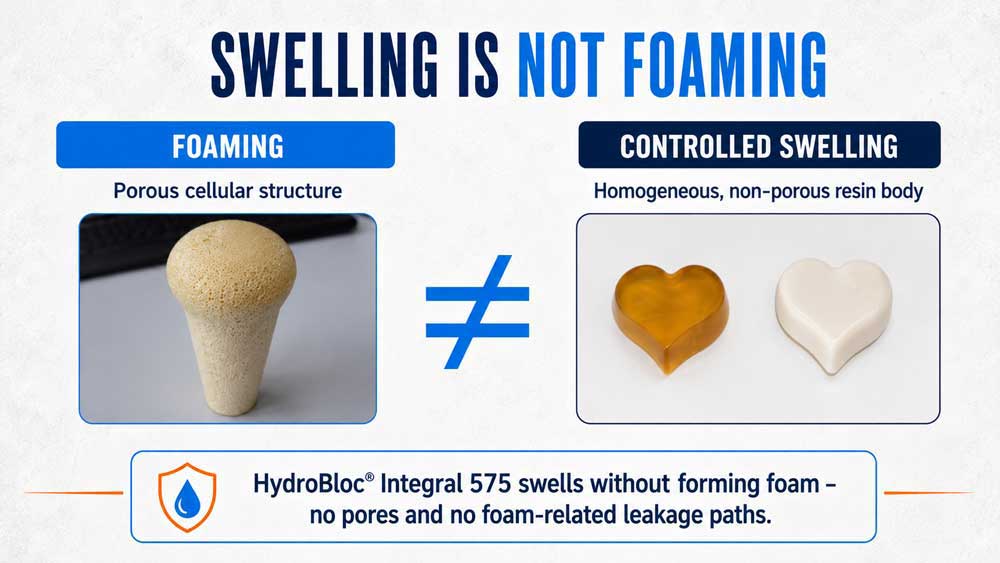
The first product to turn this vision into reality was HydroBloc® Integral 575: a ready-to-use, one-component, hydrophilic polyurethane injection resin that reacts with moisture without creating an unwanted foam structure.
Integral 575 cures to form a homogeneous, elastic mass. It combines simple application with a level of technical performance that extends far beyond the original objective.
About 20 years ago, even we could not fully foresee the material’s potential. The original vision was to make injection work simpler and less prone to error. Over time, however, it became clear that Integral 575 could do more than simplify workflows. It could change the way we think about injection resins and permanent waterproofing.
A Material That Adapts to the Situation
Moisture is rarely distributed evenly within a structure. One area may be carrying active water, while only a few centimetres away there may be very little moisture. Integral 575 responds to these differences: it reacts faster in strong contact with water and more slowly where less moisture is present.
This adaptability creates a decisive advantage. Where water must be stopped quickly, the reaction accelerates. Where the low-viscosity resin needs more time to spread, it remains fluid for longer. Because moisture is present within the structure, a reliable reaction is assured.
The material does not simply impose a rigid reaction profile on the construction site. It responds to the conditions it actually encounters.
DPI: Waterproofing Along the Entire Water Path
Waterproofing is only permanent if more than the visible point of water discharge is sealed. The decisive factor is to capture the water path as completely as possible.
Thanks to its moisture-dependent reaction behaviour, Integral 575 can penetrate deep into cracks and voids under suitable conditions. We call this principle DPI – Deep Penetrating Injection. The objective is continuous waterproofing from the point of injection to the point of water ingress.
This approach does more than treat the visible symptom. The path taken by the water itself becomes part of the waterproofing concept.
Adaptive Swelling: Protection That Continues After Curing
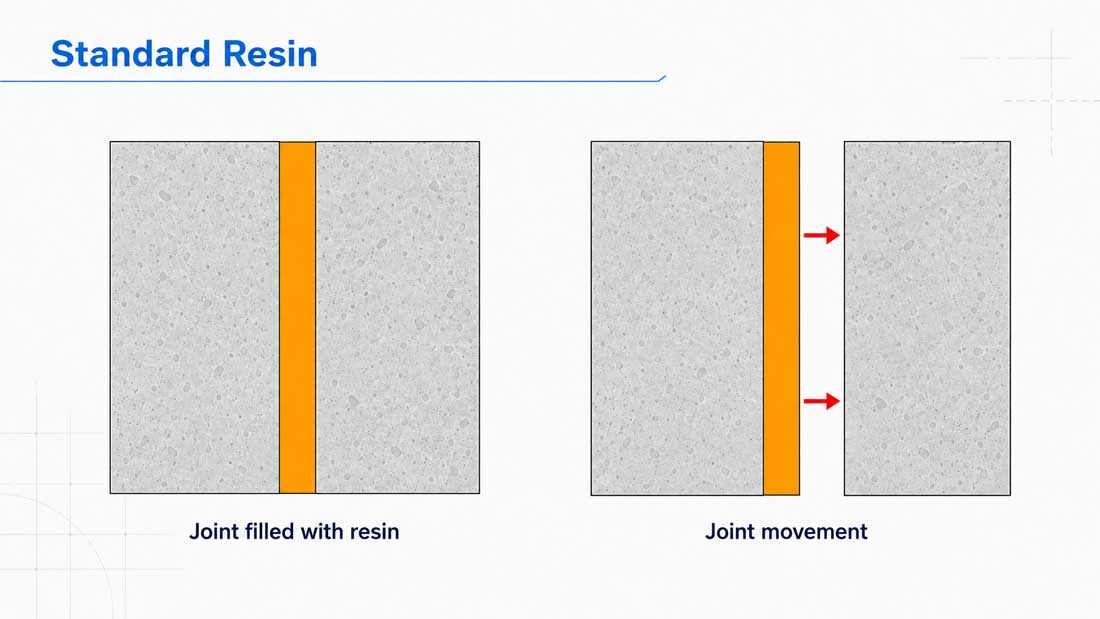
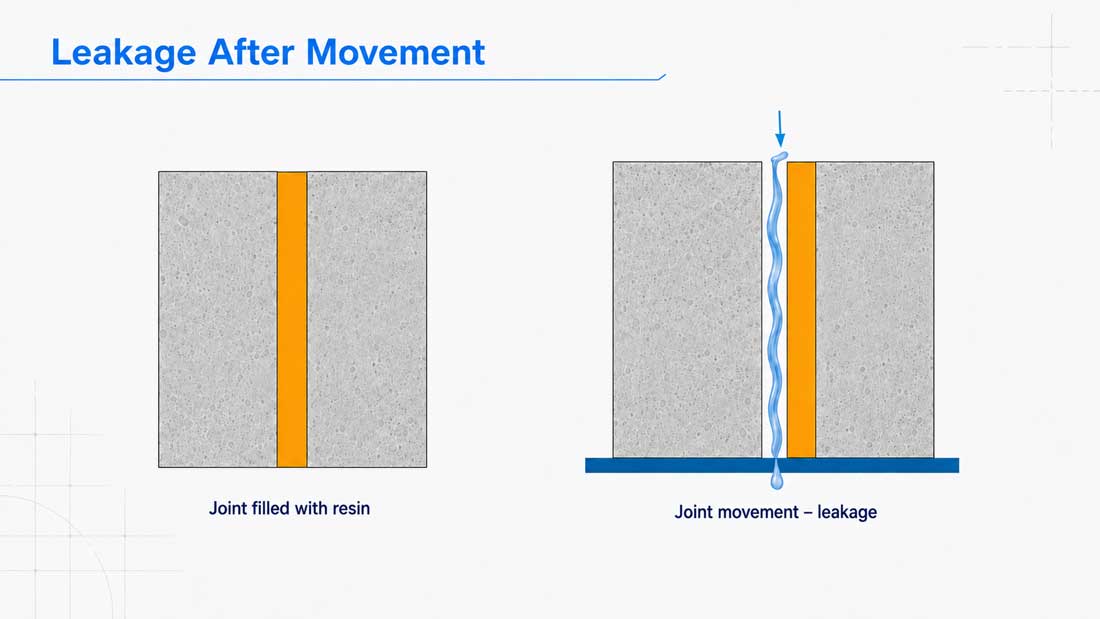
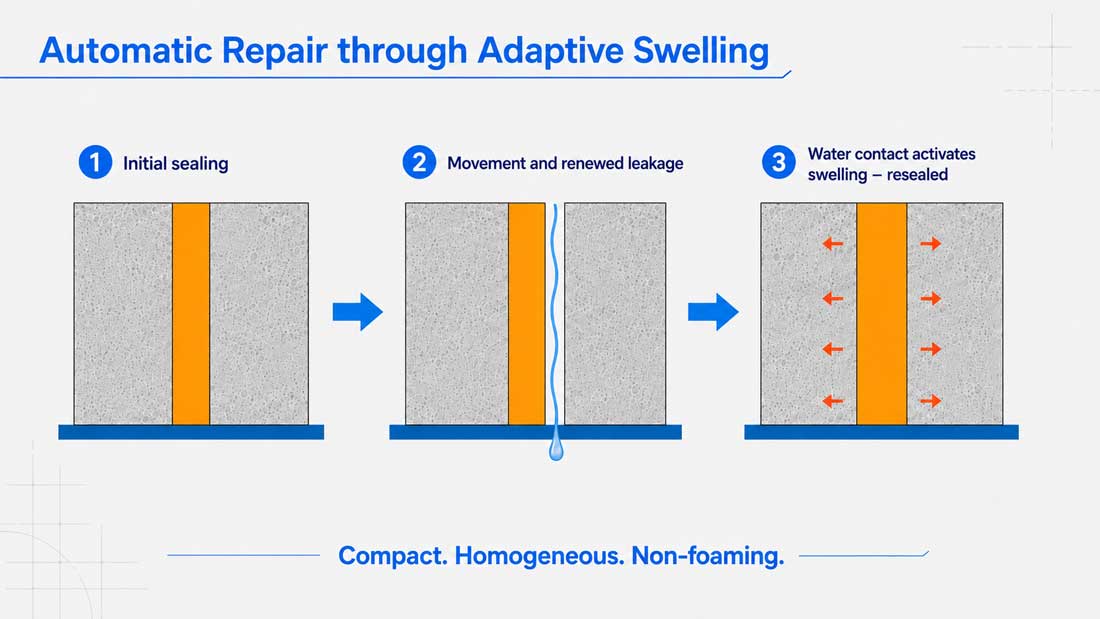
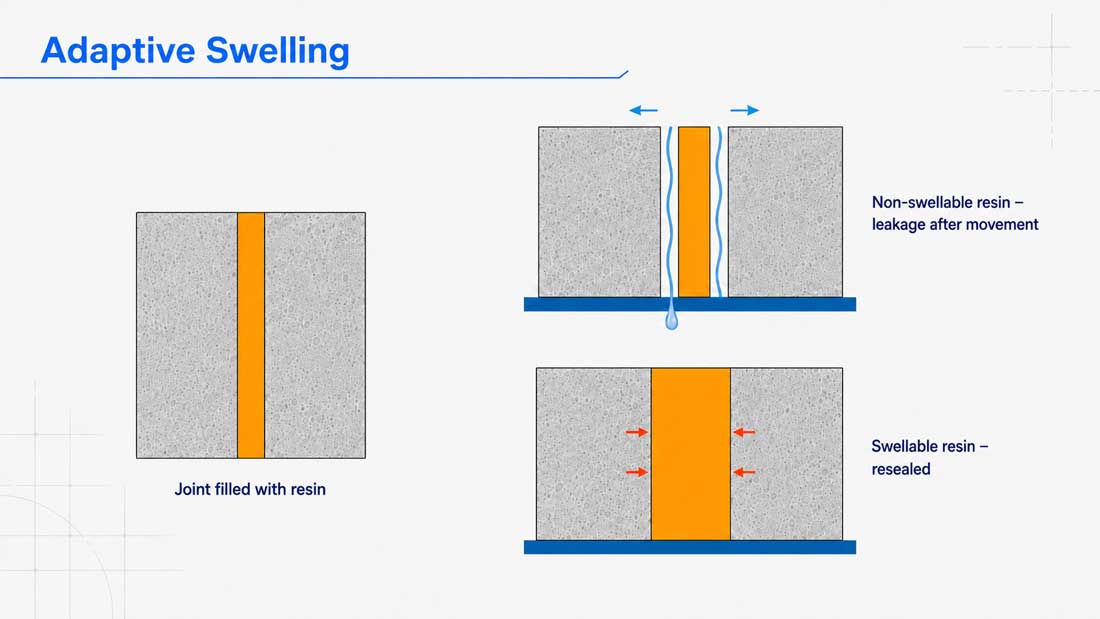
Concrete structures move. Temperature fluctuations, settlement and load changes can cause even a successfully injected crack to change slightly over time and reopen a path for water.
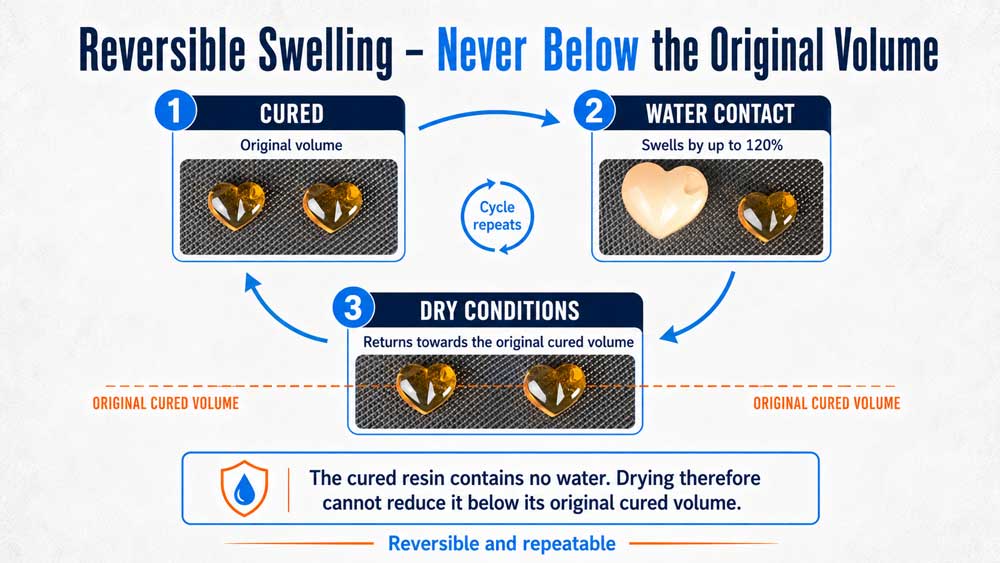
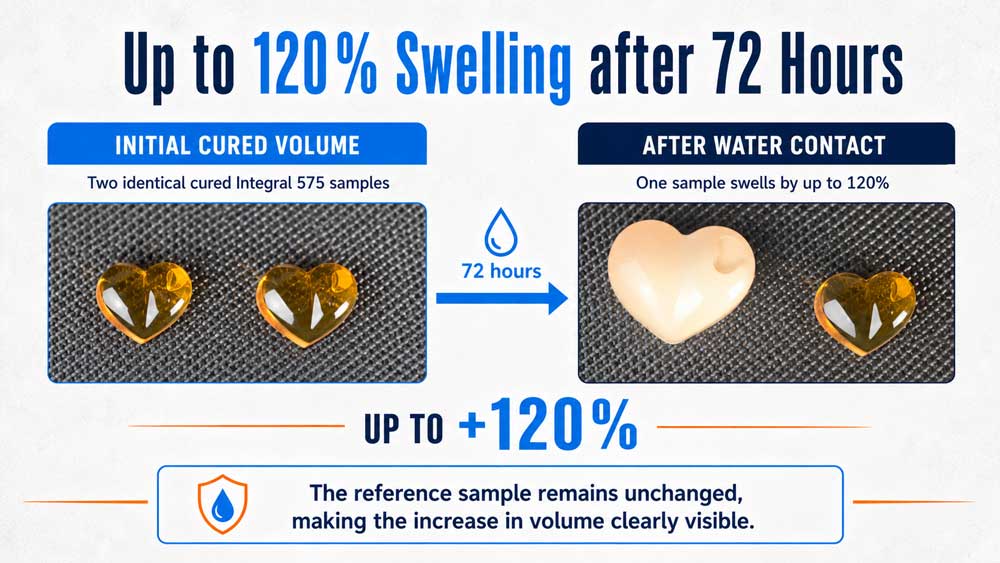
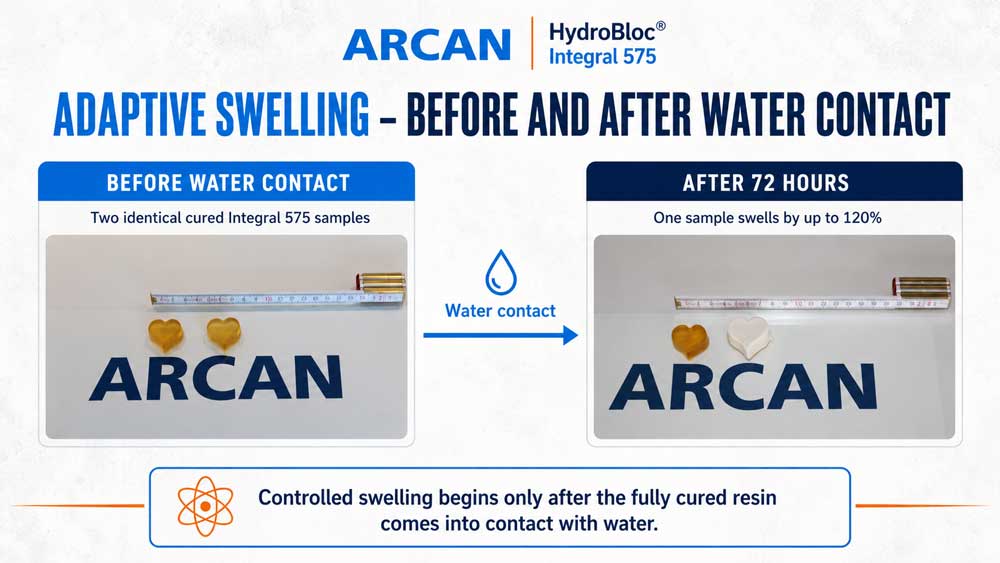
Integral 575 remains elastic after curing and can increase its volume by up to 120% when it comes into renewed contact with water. This swelling process is reversible: as the moisture decreases, the swelling also subsides. If the material comes into contact with water again at a later stage, it can swell again.
This is not a one-time foaming effect during the reaction. It is a recurring, adaptive material property. The cured resin retains its ability to respond to changing moisture conditions. Because the material itself contains no water, it does not shrink below its original cured volume when it dries.
Greater Efficiency – Far Beyond Application
The original idea of preventing errors led to benefits that now shape the entire workflow.
- No mixing errors: As a ready-to-use one-component resin, Integral 575 requires no mixing ratio between A and B components.
- Simpler workflows: Fewer preparation steps allow work to begin faster and in a more organised manner.
- Less material waste: Remaining material does not necessarily have to be used immediately, unlike an already mixed multi-component system.
- Reduced stockholding: One versatile product can replace several different resins in many standard applications.
- Greater flexibility: Integral 575 is suitable for applications including cracks, construction joints, honeycombs, injection hoses and direct water stopping.
A technical idea thus became an economical solution as well: fewer products, less complexity and greater confidence in everyday use.
An Idea Became a Milestone
Today, around two decades later, HydroBloc® Integral 575 represents far more than a single product. It represents a philosophy: technology does not have to become more complicated in order to become better. True innovation emerges where performance and ease of use come together.
What began with the desire to eliminate dosing and mixing errors evolved into a technology with adaptive reaction behaviour, Deep Penetrating Injection, reversible swelling and an exceptionally broad range of applications.
It began with an idea. Today, we know that Integral 575 was a milestone – and a gamechanger in injection technology.
And perhaps that is the most important lesson in this story: the best innovations do not arise from the desire to develop a product. They arise from the desire to solve a real problem.

Discover Integral Technology
Would you like to know whether HydroBloc® Integral 575 is suitable for your waterproofing application? ARCAN can support you with the technical assessment and selection of the appropriate injection system.
Further information: www.arcan.biz | office@arcan.biz